
01372 466 762 
Meibomian gland dysfunction (MGD) is when the eyelid glands don’t produce enough oil to stop the watery layer of the tears from drying out. Below we explain what causes MGD and when you should seek treatment.
The normal tears of the eye are made up of three layers – an oily (lipid) layer, a watery (aqueous) layer, and a sticky (mucous) layer. MGD is when the glands that make the oily layer of the tears are not working properly, allowing the watery layer of the tears to dry out too quickly.
The meibomian glands are inside the eyelids, and the openings are on the edge of the eyelids. When the glands become blocked, the oily part of the tears cannot be released, causing the watery tears to dry up more quickly, resulting in the eye becoming dry and making it feel uncomfortable or sore. It is not usually a serious condition but can cause discomfort and sometimes blurry vision. If left untreated, the glands may stop working permanently. MGD can also cause dry eye. It is common to have a combination of MGD, dry eye and blepharitis.
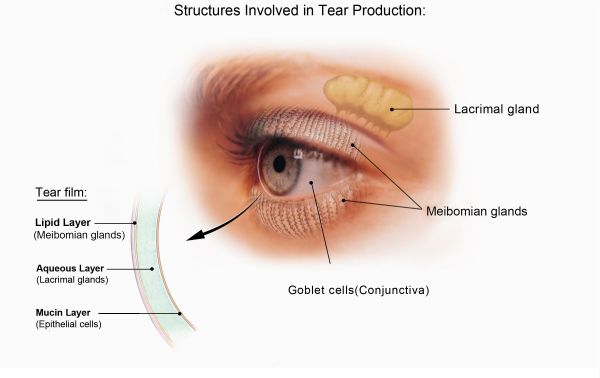
MGD is a common condition and can affect anyone. However, it is more likely to happen after the age of 50, if you have diabetes or oily skin conditions. It is also more common in women.
The eyelids can become sore and swollen as the glands become blocked. As the eyes become dry, they can feel itchy or gritty, as if there’s something in the eye. The eyes may be red, and if they are sore, may become watery, which can cause vision to become blurry.
Treatment involves releasing the oily tears from the glands. In mild cases hot compresses can be used. Microwavable eye bags make it easier to direct the heat and are much more effective than a hot cloth as they will retain heat better.
At Haig-Brown Optometry we offer intense pulsed light (IPL) and low-level light therapy (LLLT) treatment for moderate to severe cases. In clinical studies this treatment has shown a positive improvement to the symptoms of Dry Eye Disease and Meibomian Gland Dysfunction. IPL uses thermal light pulses, to stimulate the Meibomian glands to resume normal activity. LLLT emits light at a specific wavelength which triggers heating of the eyelids. This treatment eases the spill of the tear film’s oily component from the Meibomian glands, stabilizing the lipid layer and providing immediate relief.
Your Optometrist can give you further advice on the treatment of meibomian gland dysfunction.